A Case for Dating in your 30s and 40s
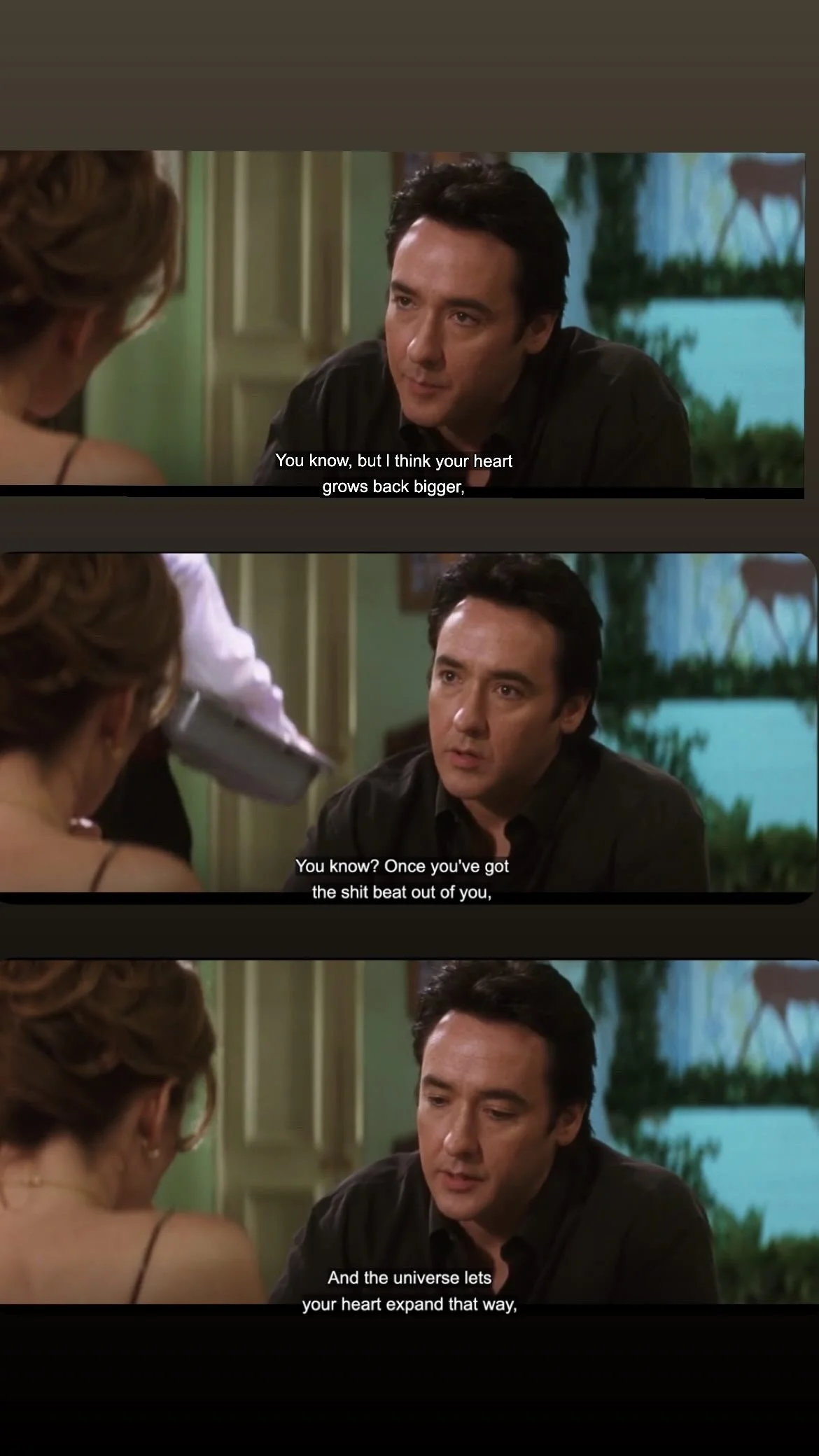
What’s your go-to comfort movie? I’m a millennial, and for better or for worse, I usually find myself rotating between Bridget Jones’ Diary, Pride and Prejudice, and Miss Congeniality. Most recently though, I rewatched a romcom that had faded into obscurity over time, Must Love Dogs, which came out in 2005. The first time I saw this movie, I was probably twelve and much too young to fully understand the movie. One scene stuck out as a vague but fond memory – Diane Lane’s character eating a single breast of chicken over the kitchen sink because she was newly divorced. I hadn’t even had my first kiss yet, but something about that imagery felt real and relatable.
It’s been a little over twenty years since that movie came out, and rewatching it now with adult eyes, I’ve come to realize - not much has changed in the dating world. People still get catfished. Suave, charming men still mislead people. And sometimes, the most loving relationships grow out of the most awkward first dates. After one, or two, or several ended relationships.
Move over, Materialists. Finding love and romance in your 30s and 40s doesn’t have to be bleak and transactional. In fact, you might end up with a more rewarding encounter than in your 20s.
By the time you reach your 30s and 40s, you’ve likely lived through a range of experiences. Relationships that worked, relationships that didn’t, and lessons learned along the way. All these lived experiences grow into greater emotional maturity. With time and reflection, you start to understand your own patterns better, recognize red flags sooner, and have a clearer sense of the kind of relationship that truly fits your life (or in Diane Lane’s character’s case – she learns to really trust her intuition!)
Another thing I appreciate about dating after the frontal lobe’s fully formed? It’s so much easier to say no. In your 20s, dating can feel driven by external expectations – what you should want, what your friends are doing, or what your parents did when they got married. In your 30s and 40s, what’s most important is how you feel. You might feel more comfortable declining a second date if the connection isn't there, or stepping away from a dynamic that doesn’t align with your values. Rather than being discouraging, this clarity can actually make dating more emotionally sustainable.
There’s also a frequently overlooked benefit: intimacy often improves with age. By this stage of life, many of us feel more at ease in their own bodies and more confident communicating our desires. Instead of guessing what a partner might enjoy, you’re likelier to express what feels good and ask questions about what your partner likes as well. This openness can lead to a more satisfying and connected sexual experience.
Of course, dating in your 30s and 40s can still come with its challenges. People carry emotional baggage from previous relationships, busy careers can make schedules complicated, and online dating can feel exhausting. Not to mention, for a lot of us, there’s internalized pressure to make things happen, or to be on the apps all the time. So it’s natural to have moments where hope dips.
But it’s worth remembering that dating at this stage of life isn’t about starting from a blank canvas like teens and people experimenting in their 20s. It’s about building from a foundation of experience. You know yourself better. You’re clearer about what matters. And you’re more capable of recognizing a relationship that genuinely supports your growth and happiness.
Of course, all of this is easier said than done. It’s helpful to have someone you can talk to for hours about the ups and downs of dating past 30, someone who really understands the frustration of getting ghosted, breadcrumbed, or orbited on social media (yes, you know the type - they haven’t reached out to you, but they’re still watching all your IG stories). And beyond matches, there’s the relationship-building aspect, because even the most perfect matches come with their own weighted history, and so do you.
Counseling can be helpful because it’s not just about venting, or self-improving until you feel loved. When you walk in to this space with me, my hope is that you leave with a different outlook on love and romance. And that, even with all the butterflies and the potential mishaps, you know that you’re going to be okay.